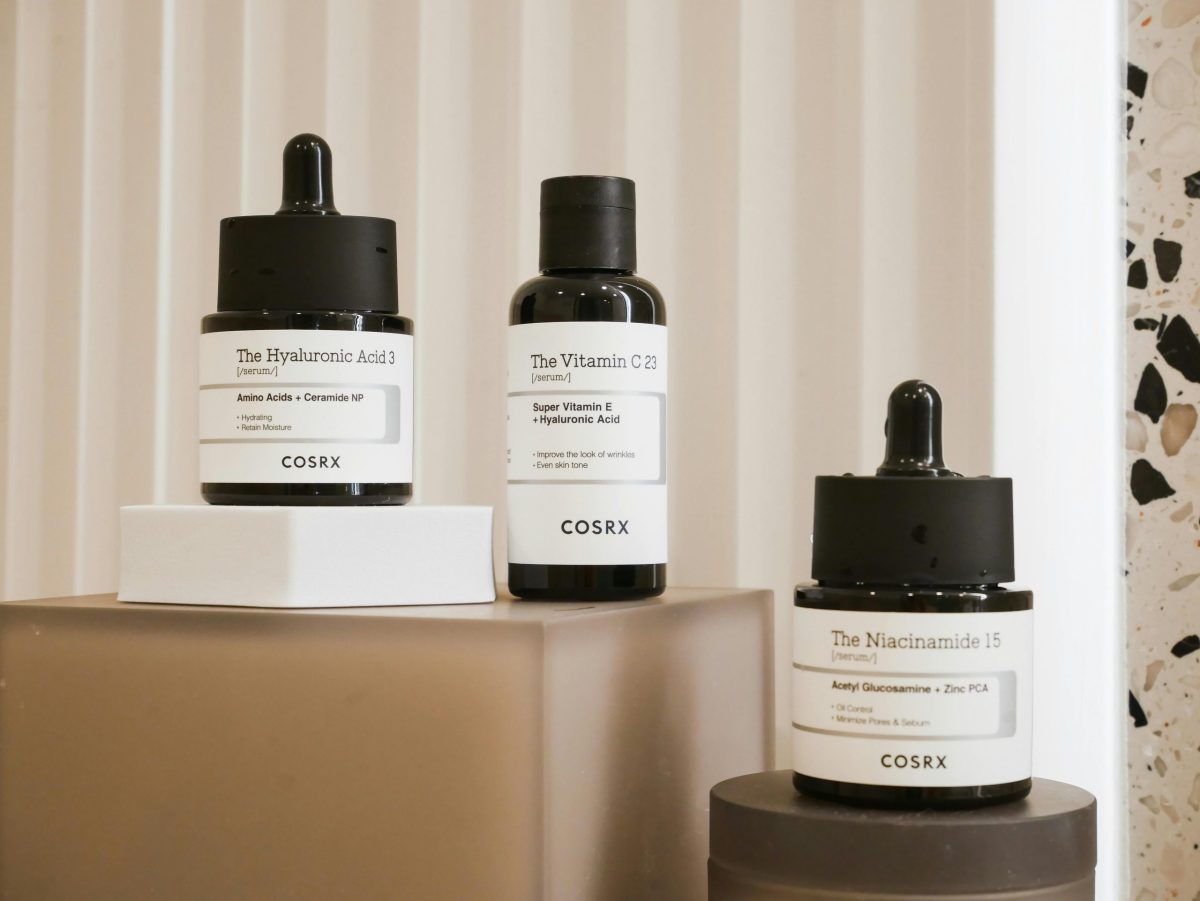
I’ll save you from scrolling through a wall of ingredient definitions to get the answer. Apply hyaluronic acid first, then niacinamide. That’s the order that works best for most people, and it’s what most dermatologists recommend.
But “most people” isn’t everyone. If you have oily skin, the order might actually flip. And if you’re using products where the niacinamide serum happens to be thinner than your hyaluronic acid serum, the standard advice doesn’t quite apply. Let me walk you through exactly when each order makes sense so you can stop second-guessing every time you reach for your serums.
Why Hyaluronic Acid Usually Goes First
The golden rule of skincare layering is thin to thick. You apply your lightest, most watery products first, then work your way up to heavier creams and oils. This allows each product to absorb properly instead of sitting on top of the previous layer.
Hyaluronic acid serums tend to be very lightweight and watery. Niacinamide serums are usually slightly thicker. So in a standard routine, HA goes on first.
But that’s only half the reason. The other half is about how hyaluronic acid actually works. HA is a humectant. It draws water into your skin. For it to do that effectively, it needs to go onto damp skin and absorb before anything else sits on top. If you apply niacinamide first, you create a layer between the hyaluronic acid and the moisture on your skin, which can reduce how well the HA pulls water in.
Once the hyaluronic acid has absorbed and your skin feels plump and hydrated, niacinamide goes on next. It reinforces your skin barrier, helps lock in all that moisture, and gets to work on its own benefits like evening skin tone and minimizing pores.
The finish with a moisturizer seals everything in place. And in the morning, sunscreen is always the final step.
When to Flip the Order
Here’s where most articles stop. They give you “HA first, niacinamide second” and call it a day. But your skin type actually matters here, and the answer changes depending on what you’re dealing with.
If you have oily skin: Consider applying niacinamide first. L’Oreal Paris and several dermatological sources recommend this approach because niacinamide regulates sebum production. By applying it directly to clean skin, it can start managing oil right away. Then follow with hyaluronic acid for lightweight hydration that won’t make you feel greasy. This sequence prioritizes oil control over maximum HA absorption, which is a worthwhile tradeoff if shine is your main concern.
If you have dry skin: Stick with the standard order. Hyaluronic acid first on damp skin, then niacinamide. Your priority is getting as much moisture into your skin as possible, and HA does that best when it has direct contact with damp skin and nothing in between.
If you have combination skin: You can actually do both. Apply hyaluronic acid to your drier areas (cheeks, under-eyes) and niacinamide to your oilier T-zone first, then layer the other ingredient over the top. It takes an extra 30 seconds but it lets each area of your face get exactly what it needs first.
If you have sensitive skin: The order matters less than the concentration. Both ingredients are gentle, but start with lower concentrations (especially for niacinamide, where 3 to 5% is safer for reactive skin than jumping straight to 10%). Apply in whichever order feels most comfortable, and introduce one ingredient at a time with a few days in between.
What If Your Products Don’t Follow the “Rules”?
This is the part that trips people up in practice. The thin-to-thick rule assumes your hyaluronic acid serum is thinner than your niacinamide serum. But that’s not always the case.
Some hyaluronic acid products are formulated as thick, gel-like serums. Some niacinamide products are incredibly watery. If your niacinamide serum is lighter than your HA serum, apply the niacinamide first. The consistency of the actual product you’re using matters more than a general rule about the ingredient.
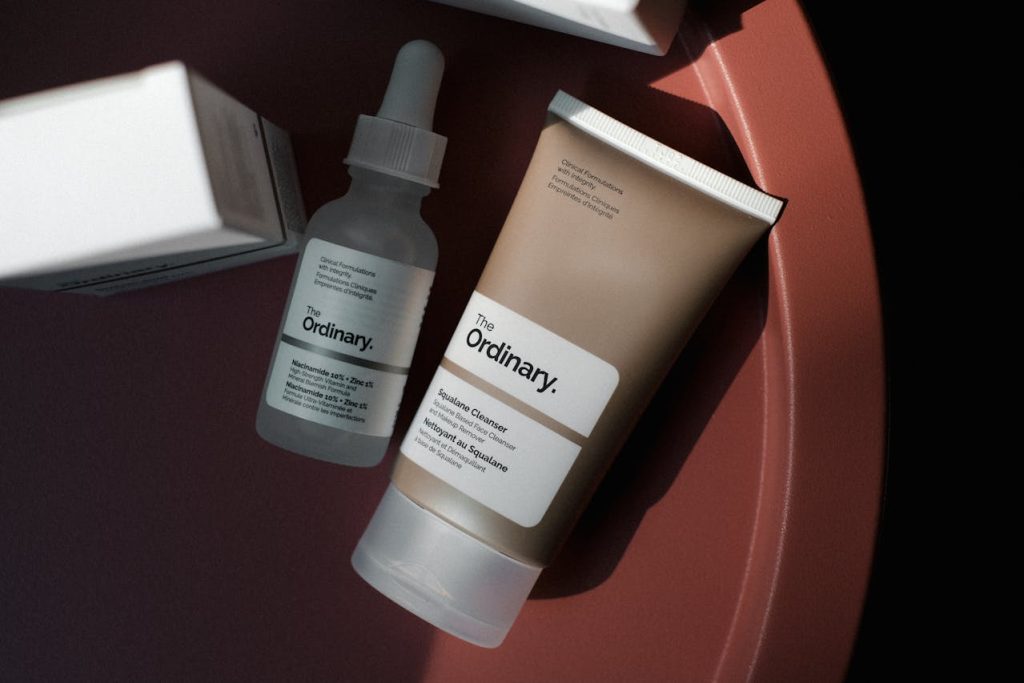
The Ordinary’s team puts it simply: since both of their HA and niacinamide serums are water-based, they can be applied in either order. They recommend prioritizing the ingredient that targets your main concern. If dryness is your biggest issue, HA goes first. If pore visibility or uneven tone is the priority, lead with niacinamide.
So before you overthink it, look at the two products in your hand. Whichever one is thinner and more watery goes first.
The One Step That Matters More Than Order
In 8 years of helping clients build their skincare routines, I’ve noticed something: people spend a lot of energy worrying about the order of their serums but skip the step that actually makes the biggest difference.
Apply your hyaluronic acid to damp skin. Not dry skin. Damp.
HA is a humectant. It needs water to work. If you apply it to dry skin in a dry environment, it can pull moisture from deeper in your skin instead of from the surface, which leaves you worse off. A quick mist of water or applying it right after washing your face while your skin is still slightly wet makes all the difference.
I’ve explained this to so many clients who said their hyaluronic acid serum “wasn’t working.” Once they started applying it to damp skin, the results were immediate. Plumper, softer, more hydrated skin from the exact same product.
That one change will do more for your results than stressing about whether niacinamide or hyaluronic acid goes on first.
Quick Reference: Your Layering Order
For dry or normal skin (AM and PM): Cleanser → Hyaluronic acid on damp skin → Niacinamide → Moisturizer → SPF (morning only)
For oily skin (AM and PM): Cleanser → Niacinamide → Hyaluronic acid → Lightweight moisturizer → SPF (morning only)
For combination skin (AM and PM): Cleanser → Hyaluronic acid on drier areas, niacinamide on T-zone → Layer the other on top → Moisturizer → SPF (morning only)
If you use vitamin C too (AM): Cleanser → Vitamin C → Hyaluronic acid → Niacinamide → Moisturizer → SPF
If you use retinol too (PM): Cleanser → Hyaluronic acid → Retinol → Niacinamide → Moisturizer
Not sure why SPF is non-negotiable? Here’s why wearing it every day matters more than any serum in your routine.
Frequently Asked Questions
Does it really matter which one goes first?
It matters, but it’s not a dealbreaker. Applying them in the wrong order won’t cause a reaction or hurt your skin. You’ll still get benefits from both ingredients. The right order just helps each product absorb better and perform at its best. Think of it as optimization, not a safety issue.
Can I use a single product that contains both ingredients?
Yes. Many moisturizers and serums are formulated with both niacinamide and hyaluronic acid, which eliminates the layering question entirely. This is a great option if you prefer a simpler routine. The trade-off is that you have less control over the concentration of each ingredient.
How long should I wait between applying each one?
You don’t need to set a timer. Just wait until the first serum feels absorbed, usually about 60 seconds. Your skin should feel slightly tacky but not wet. If you apply the second serum too quickly, you might get pilling (that annoying balling-up of product), which wastes both serums.
Can I use both morning and night?
Absolutely. Both niacinamide and hyaluronic acid are safe for twice-daily use. Neither causes photosensitivity, so they’re perfectly fine in your morning routine — just make sure your sunscreen is in an FDA-approved format.Many people use both AM and PM for consistent hydration and barrier support.
What if I get irritation from this combination?
Irritation from this specific pairing is rare since both ingredients are well-tolerated. If it happens, the most likely cause is a high niacinamide concentration. Try reducing to a 3 to 5% niacinamide product. If irritation continues, use one ingredient in the morning and the other at night to reduce the load on your skin at any one time.